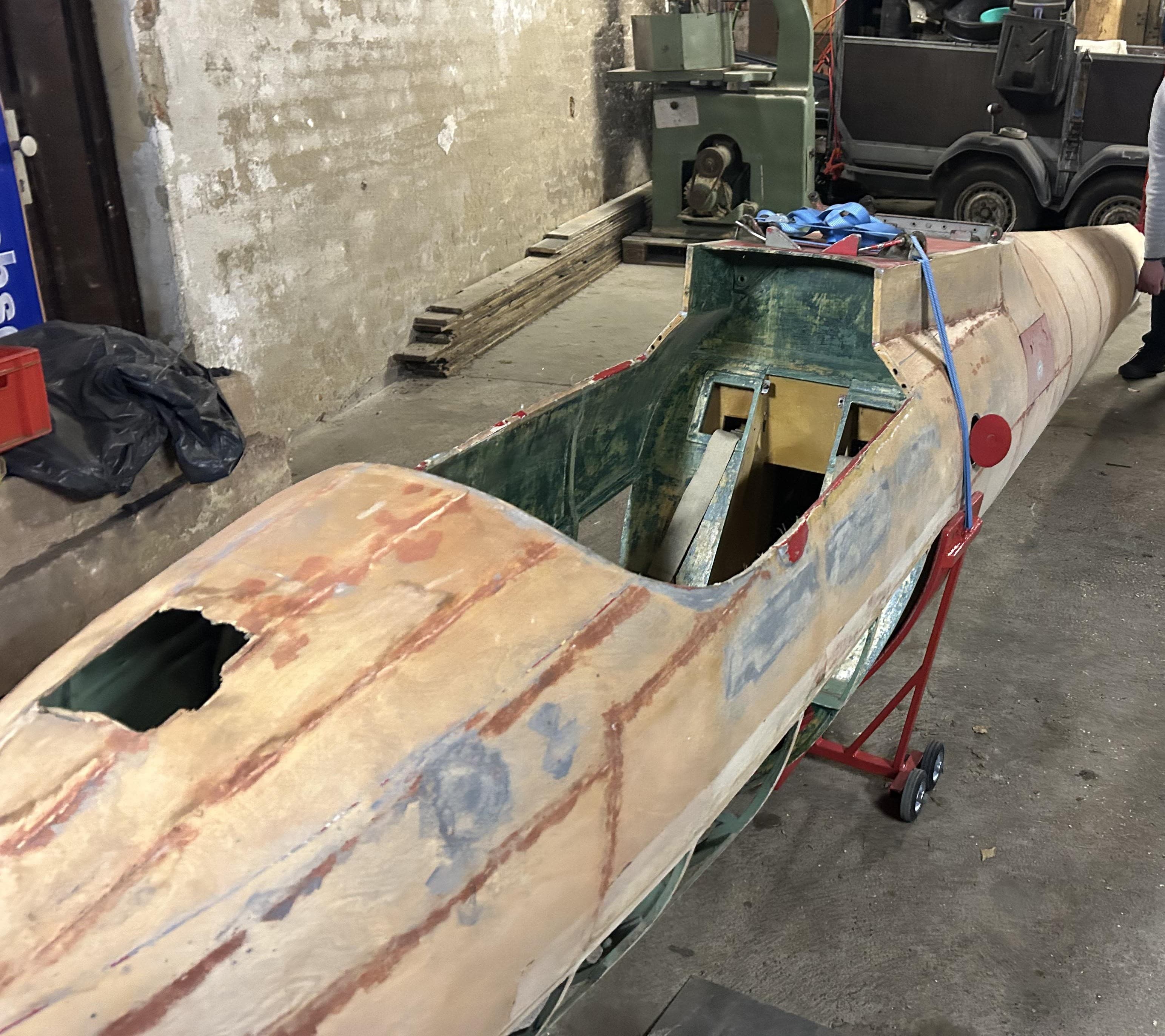
DFS Meise (HB-386)
One of the best handling and most elegant wooden gliders in history, designed for the 1940 Olympics.
Aircraft Story
Designed as a standard competition glider for the planned 1940 Olympic Games (which did not take place). The Meise (Titmouse) is considered one of the most maneuverable and elegant wooden gliders in history.
In 1940, gliding was to become an Olympic discipline. In order to offer all pilots equal conditions, a competition for a standard glider was announced in 1937/38.
The German Research Institute for Gliding (DFS), with a team led by Hans Jacobs, won the competition with the DSF Meise design.
All countries that wanted to participate in the Olympic Games in Helsinki received a set of plans so that they could build their own aircraft.
Although the Olympic Games did not take place due to the war, Switzerland had the appropriate plans and authorization for construction.
So it was decided to build a series of 10 aircraft with the help of the federal government and financial support from Migros founder Duttweiler as part of a Pro Aero campaign.
These aircraft were to be made available to gliding clubs on favorable terms.
Due to the difficulties during the war and various Swiss adjustments, the construction of the Meisen at Segelflugzeugbau Zürich e.G. was delayed, so our Meise HB-386 was not completed until 1945.
The glider was built in 1943/45 in Switzerland using casein glue. Due to moisture damage, the cockpit area has to be rebuilt, one wing has to be rebuilt (new spar already done, nose ribs already built).
Technical Specifications
Renovation Progress
Gallery
